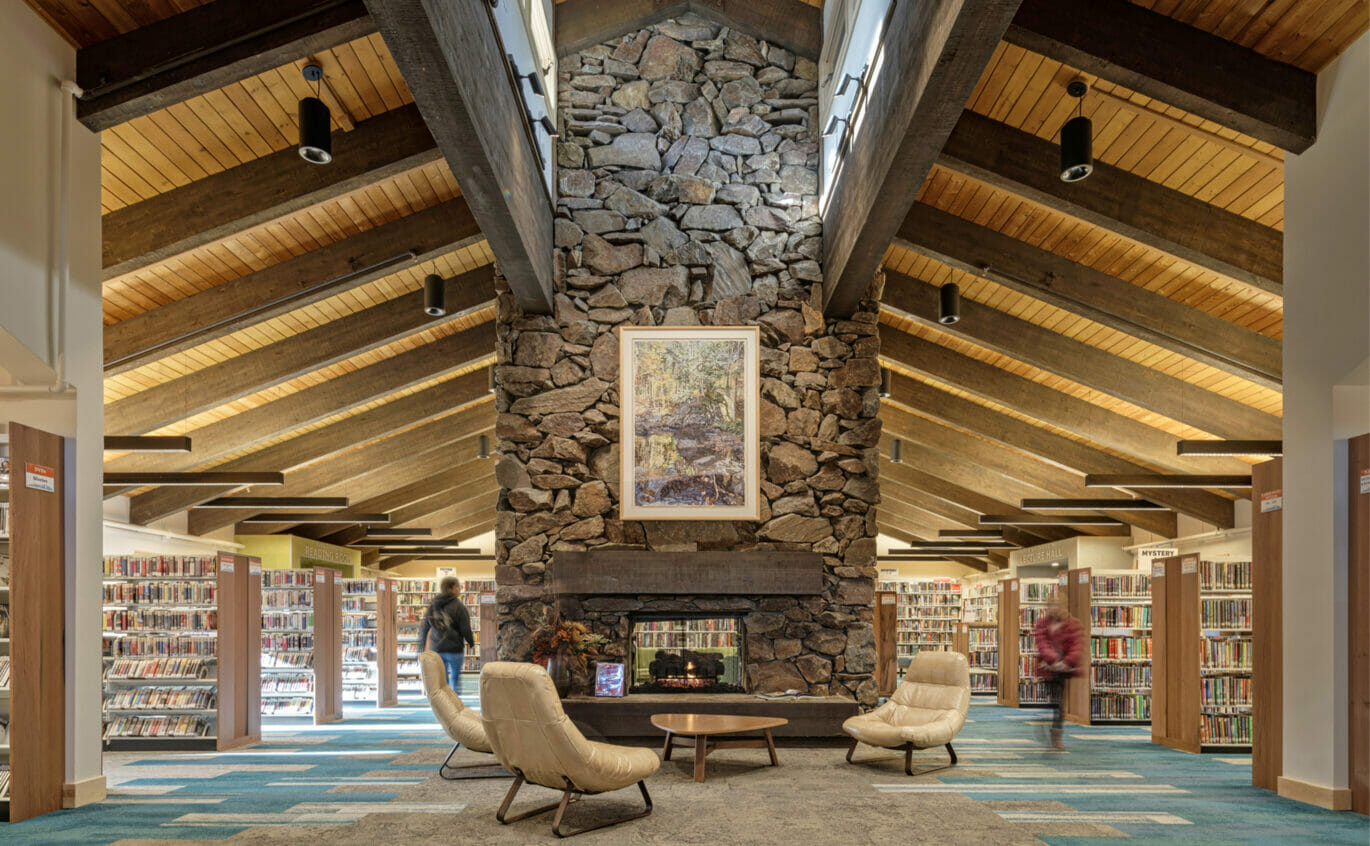
Handwritten letters have connected people for centuries. The letters in this exhibit are among many held in the archive of the Jeanne Rodger Lane Center for Regional History at The Community Library. They show how personal correspondence can carry declarations of love, offerings of comfort, news of triumph and loss, as well as the ordinary details of daily events that compose our lives.
In these letters, postcards, and notes, we encounter voices preserved not only by what they say, but by the unmistakable traces of the hands that wrote them.
The slant of the handwriting, a hastily added postscript, a smudge of ink carry a unique sense of the writer that survives long after the moment has passed.
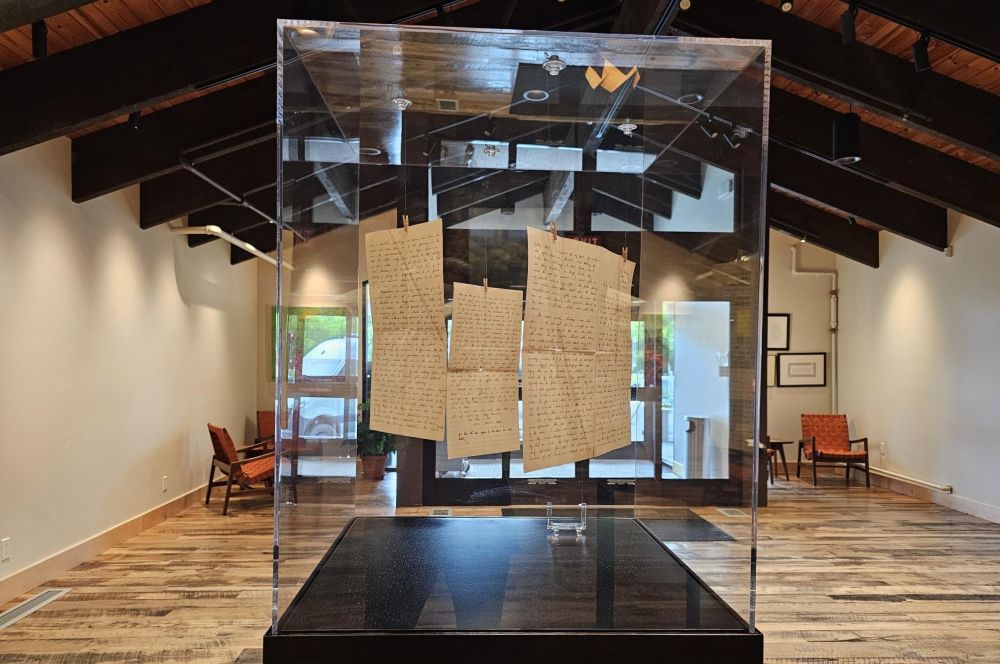
Through our correspondence, we seek ways to be seen, remembered, and understood.
When is the last time you put to pen to paper and a stamp to the corner of an envelope?
What does it mean to consider correspondence in a world of emails, text messages, and digital posts?
George Blackmon’s Letter and Mining Map to a Prospective Buyer
April 14, 1923
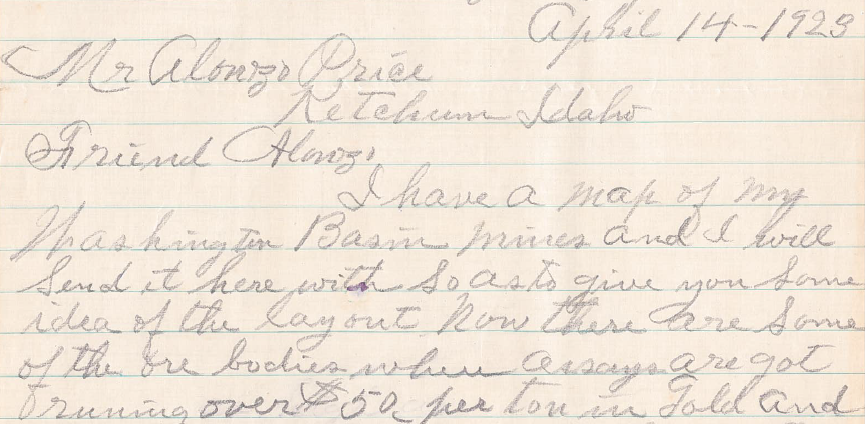
George Blackmon’s letter and hand-drawn map offer a rare glimpse into Central Idaho at the turn of the century. Writing to prospective investor Alonzo Price, Blackmon details the extent and estimated value of his Washington Basin mining claims in the White Cloud Mountains. He invites Price to visit in July, when the snow “is gone off,” explaining that he expects to snowshoe out after spending a month at the mines. Closing with the hope of a favorable reply, he signs, “I remain yours most respectfully.”
Born into slavery in Kentucky around 1854, Blackmon learned to read and write after emancipation. His literacy amplified his freedom as he made his way to Idaho Territory in the late 1870s. He dreamed of building both financial success and a thriving Black community in the White Clouds. Today, his legacy endures in the Sawtooth National Recreation Area, where Blackmon Peak bears his name. The Community Library has commissioned a sculpture of Blackmon to be installed in front of the Wood River Museum of History + Culture in June of 2027.
“I have a map of my Washington Basin Mines and I will Send it herewith So as to give you Some idea of the layout Now there are some of the ore bodies where assays are got running over $50 per ton in gold …”
Letter from Southhampton, England
November 11, 1940
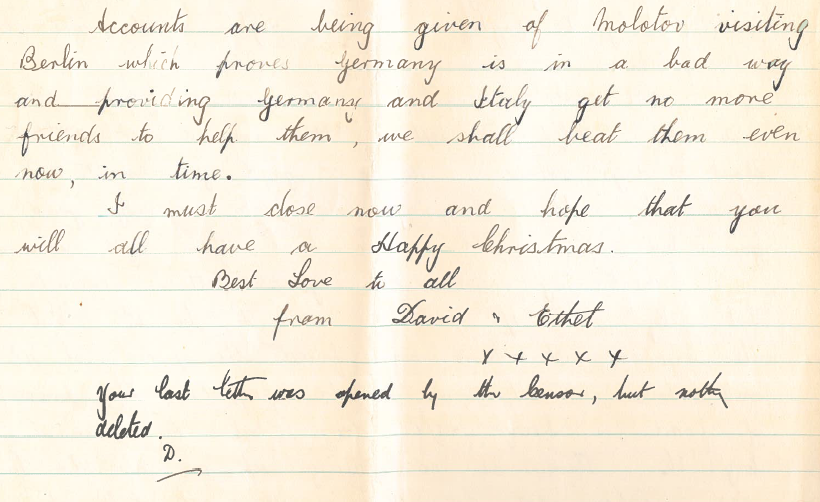
On Armistice Day in1940, David, a husband and father in England, writes a long letter to friends on the other side of the Atlantic. His letter reveals both the hardships of war and the resilience of ordinary civilians.
In his letter, David deftly moves from describing U Boats sinking Allied ships, to the teaching of ABCs, to bombing raids with schoolchildren and families hunkered in shelters “too scared to sit while pieces fell off the roof above [and] the ground shook.” He ends his letter with accounts of Germany and Italy in a voice of optimism and determination – and a postscript noting that the last letter he received from his friends did not appear to have been censored, revealing the dynamics of communication in wartime
“Accounts are being given of Molotov visiting Berlin which proves Germany is in a bad way and providing Germany and Italy get no more friends to help them, we shall beat them even now, in time.”
Letter from Clara Spiegel to Angela and Jack Hemingway
January 23, 1993
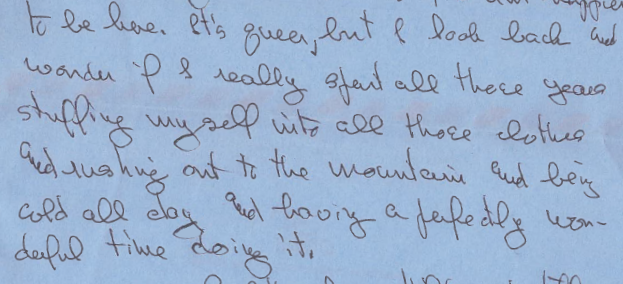
Clara Spiegel was one of the original 17 founding women of The Community Library, and she was a close friend of Ernest Hemingway. She continued that friendship with Ernest’s eldest son, Jack, who made a home in Sun Valley, and his second wife, Angela. In 1993, Clara writes from Taupo, New Zealand, expressing compassion for “Bumby’s” (Jack’s) recent eye surgery, her enthusiasm for fishing days, and her astonishment at skiing on Bald Mountain as “all those years stuffing myself into all those clothes and rushing out to the mountains and being cold all day and having a perfectly wonderful time doing it.”
Clara’s wit comes through in her note of November 1995, as she thanks Angela and Jack for their Christmas gifts. She claims eating all the chocolate sticks might not make her “look too good … but she will certainly smell lovely from the Gold Leaf and Hydrangea Potion.”
You’ll note from her penmanship that she writes the word “and” at a downward slant in a unique and charming way, leaving behind a hint of her personality.
Letter from Isabel (Belle) Pound to her “Dear Mama”
May 22, 1885
Written when she was twenty-five and pregnant with her son, Ezra – who would become an influential American poet and critic – Isabel recounts tales of travel, of the stunning landscapes along the Camas Prairie, the “unsettled” weather, and the making of tornures (bustles).
After crossing a deep stream on horseback, Isabel recalls that “all the things in the wagon, our lunch, robes etc.” were submerged and “Thereafter we looked like a moving panorama of the great American washday.”
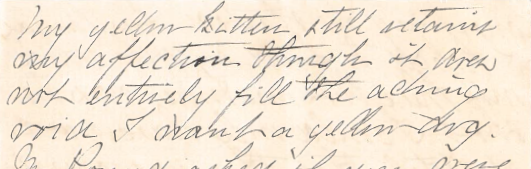
In her letter, Isabel expresses affection for her yellow kitten, “though it does not entirely fill the aching void.” We can conclude from this sentiment and her following proclamation, “I want a yellow dog,” that she recently lost a beloved pet, possibly a yellow Labrador.
“My yellow kitten still retains my affection though it does not entirely fill the aching void. I want a yellow dog.”
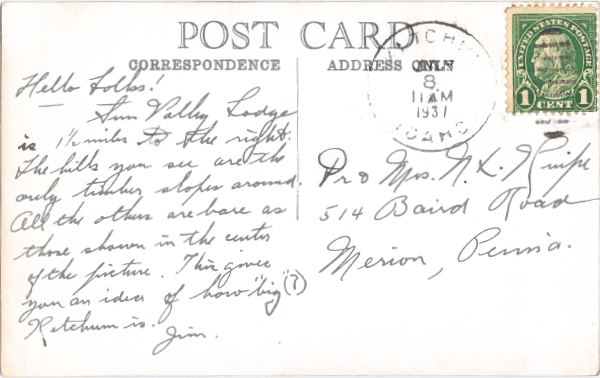
Postcard from Jim Knipe to His Parents
1937
James “Jim” Knipe served as manager of the Challenger Inn at Sun Valley during the resort’s formative years in the late 1930s. As hotel manager, he helped oversee daily operations and welcomed the stream of visitors drawn to America’s first destination ski resort. Knipe was among the hospitality professionals whose work helped establish Sun Valley’s reputation for exceptional service, contributing to the resort’s early success and the growth of the surrounding Wood River Valley.
“Sun Valley Lodge is 1½ miles to the right. The hills you see are the only timber slopes around. All the others are bare as those shown in the center of the picture. This gives you an idea of how ‘big’ (?) Ketchum is.”