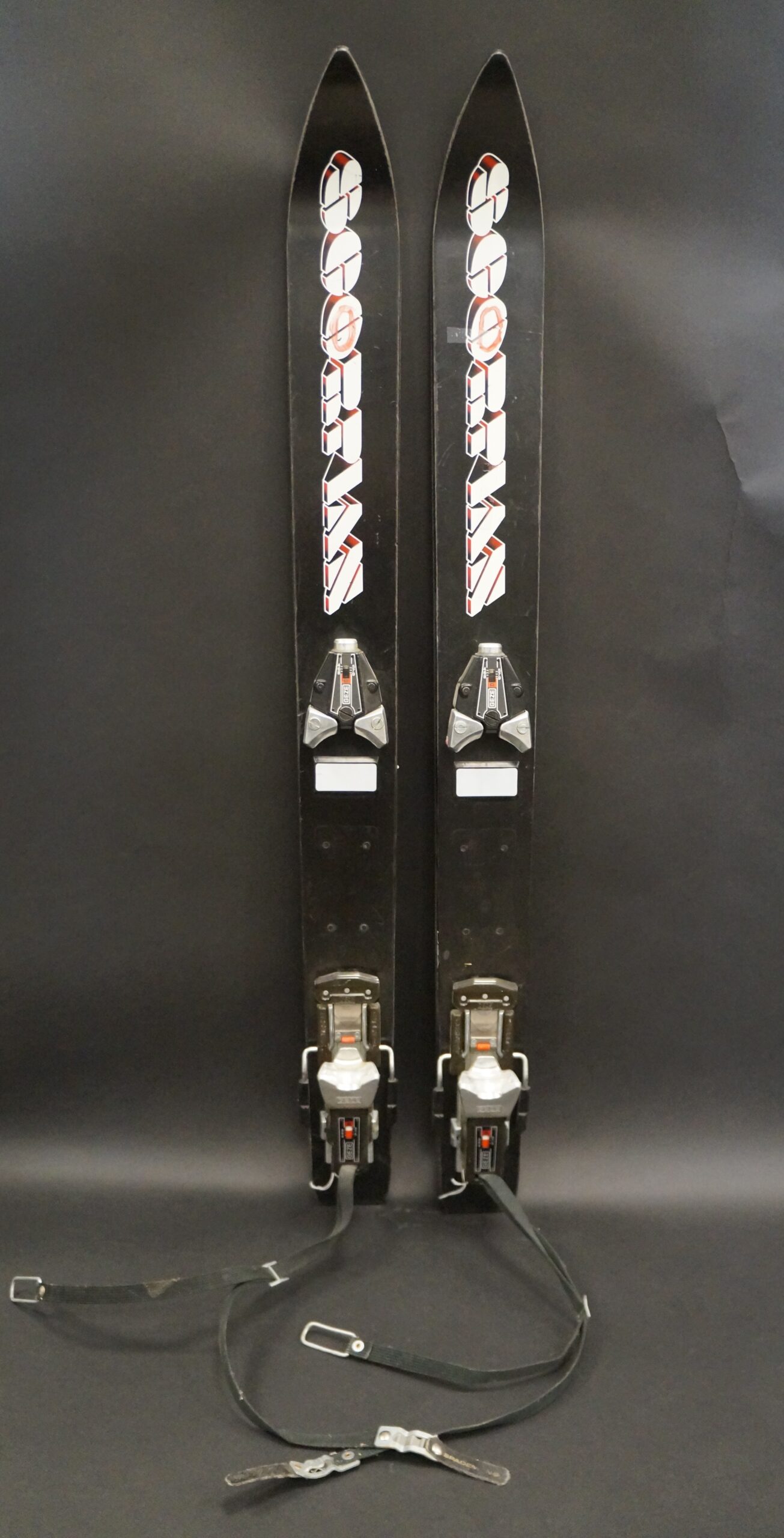
Measuring approximately 106 centimeters in length, these Scorpian short skis represent an experimental moment in late twentieth-century alpine ski design. Designed in the late 1970s by a ski innovator named Sarver, the Scorpian emerged during a period of rapid experimentation in ski technology, when designers were rethinking shape, length, and function to meet the demands of increasingly technical terrain.
Sarver’s original design was marketed under the name Lynx, but a naming conflict with a golf club manufacturer prompted a rebrand. The skis were subsequently marketed as Scorpian, a name that reflected their compact proportions and highly responsive handling. Unlike standard-length skis, Scorpians were intended for experienced skiers who prioritized agility over speed. Their short length allowed for quick, controlled turns, making them particularly well suited for moguls, tight tree skiing, and other situations where precision mattered more than long, sweeping turns.
The pair in the Wood River Museum’s collection is fitted with Geze bindings, a widely used German binding brand during the latter half of the twentieth century. While not unique to Scorpian skis, these bindings reflect the types of components commonly paired with performance-oriented alpine equipment of the era and help situate the skis within a historical context.
Decades later, Scorpian skis have taken on a second life in Sun Valley ski culture. In 2007, a group of local skiers launched the Scorpian Nationals, a closing-day tradition that blends nostalgia, athleticism, and humor. Participants ski on vintage Scorpians, charge down the final strip of snow on a run fittingly named “Scorpion,” then sprint to Apple’s Bar to finish with a celebratory beer. What began as a playful homage became a beloved ritual, underscoring the enduring cultural legacy of these unconventional skis.
Search more of our collection here.
Wood River Museum of History & Culture, 2025.01.139.
By Ellie Norman, Museum Collections Specialist