Impressionism to Modernism, 1900-1930. By John Impert
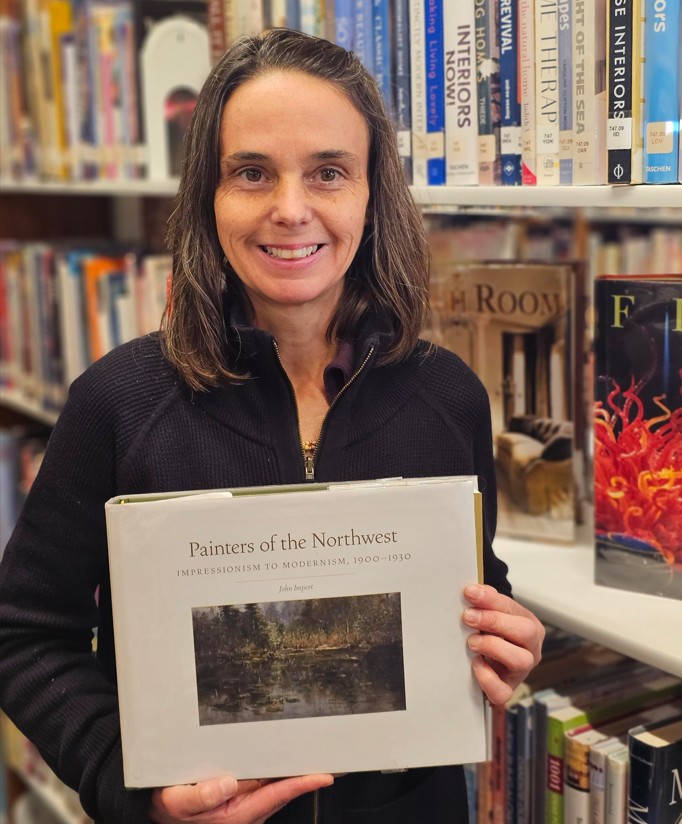
Processing Associate Angel Gonzalez recommends Painters of the Northwest: Impressionism to Modernism, 1900-1930 by John Impert.
During his time as a graduate student at the University of Washington, author John Impert wrote his dissertation on impressionist painters from the Pacific Northwest from the years 1900-1930. The project initially is credited to Impert’s advisor who held a seminar in 2007, the goal being to explore what artists were prevalent at this time.
While working alongside his advisor on this project, Impert realized this would be his focus for his graduation project, and the research he gathered eventually led to the creation of this book.
Impert narrowed a list of nine essential artists from this time frame, highlighting many of the works they accomplished, including the background of each artist and the influences that shaped their technique and sense of reverence for the Pacific Northwest.
The images compiled in this lovely, compact book are worthwhile, as are the studies of the lives of each artist.
In its raw form, whether untrammeled wilderness from Alaska, scenes of the seaports in Washington or rural country scenes in Oregon, the influence of impressionism translated outlines of formal composition with light, variation in colors, or spontaneity in the moment.
Two paintings are of noteworthy significance concerning these elements. Artist Paul Morgan Gustin’s “King Above the Clouds, 1923” shows a cool moment in time in front of Mount Rainier. The scene includes slightly bent evergreen trees upon the hillside below Rainier. There is blue sky, though not necessarily “a windy day”, as Impert says, the bent trees draw attention and reflect “the awe felt in the sublime presence of the mountain.”
For the second painting chosen, it is memorable to mention renowned painter, C.C. McKim from Oregon. He has several works on the Oregon Coast, which are quintessential impressionistic art. As Impert states, “McKim’s saturated colors in “Tidal Pool at Yachats” seem to pop off the canvas.
The effect of this painting can be related to synesthesia, “where colors evoke music or vice versa…”
Hopefully these two examples will inspire more readers to research this book and rekindle an imaginative spirit of reverence for both the landscape and creative memories. These paintings serve an important purpose; they are a precious gift to humanity.