• Skip to primary navigation
  • Skip to main content
  • Skip to primary sidebar
Menu
Community Library Logo
Search
  • Search the CATALOG for books and more
  • Search the CALENDAR for programs and events
  • Search the WEBSITE for general information
  • I Want To
    • Use My Library Account
    • Get a Library Card
    • Reserve a Room
    • Find Books and More
    • Renew or Place a Hold
    • Request an Item
    • Digital Collections
    • Computers and Printing
    • Ask a Librarian
  • Visit
  • Use the Library
    • Books, eBook, and More
    • Special Collections
    • Digital Collections
    • Children’s and Young Adult Library
    • Research and Learn
    • Center for Regional History
    • Reserve a Room
    • Library Policies
    • Frequently Asked Questions
  • Programs
    • Calendar of Events
    • Event Archive
    • Adult Summer Reads
    • Book Club
    • Bookmobile
    • Hemingway Distinguished Lecture
    • Sun Valley Early Literacy Summit
    • Winter Read 2026
  • Wood River Museum
    • Wood River Museum Current Exhibits
    • Online Collections Database
    • Exhibition History
    • History in Your Hands-Free App
    • Museum History
  • Hemingway
    • Hemingway House and Preserve
    • Writer-in-Residence Program
    • Ernest Hemingway Seminar
    • Hemingway House Online Collection
  • Our Story
    • Staff and Board of Trustees
    • Library Blog
    • Newsletters and Reports
    • Employment & Volunteer Opportunities
Give and Support
  • The Community Library
  • Gold Mine Stores
  • Center for Regional History
    • Wood River Museum of History + Culture
    • Regional History Reading Room
    • Historic Photographs
The Community Library Association
  • The Community Library
  • Gold Mine Stores
  • Center for Regional History
  • Get a library card
  • I want to
    I Want To
    • Use My Library Account
    • Reserve a Room
    • Find Books and More
    More
    • Renew or Place a Hold
    • Request an Item
    • Use Our Digital Collections
    • Use a Computer/Print/Scan
    • Ask a Librarian
Community Library Logo
  • I Want To
    • Use My Library Account
    • Get a Library Card
    • Reserve a Room
    • Find Books and More
    • Renew or Place a Hold
    • Request an Item
    • Digital Collections
    • Computers and Printing
    • Ask a Librarian
  • Visit
  • Use the Library
    • Books, eBook, and More
    • Special Collections
    • Digital Collections
    • Children’s and Young Adult Library
    • Research and Learn
    • Center for Regional History
    • Reserve a Room
    • Library Policies
    • Frequently Asked Questions
  • Programs
    • Calendar of Events
    • Event Archive
    • Adult Summer Reads
    • Book Club
    • Bookmobile
    • Hemingway Distinguished Lecture
    • Sun Valley Early Literacy Summit
    • Winter Read 2026
  • Wood River Museum
    • Wood River Museum Current Exhibits
    • Online Collections Database
    • Exhibition History
    • History in Your Hands-Free App
    • Museum History
  • Hemingway
    • Hemingway House and Preserve
    • Writer-in-Residence Program
    • Ernest Hemingway Seminar
    • Hemingway House Online Collection
  • Our Story
    • Staff and Board of Trustees
    • Library Blog
    • Newsletters and Reports
    • Employment & Volunteer Opportunities
Search
  • Search the CATALOG for books and more
  • Search the CALENDAR for programs and events
  • Search the WEBSITE for general information
Give & Support

Champagne!

Gold Mine Processing Manager Kelly Noble offers an interactive book and film review on the subject of champagne.

For readers 21 years or older.

Champagne: How the World’s Most Glorious Wine Triumphed Over War and Hard Times by Don and Petie Kladstrup.

A Year in Champagne: The History of the Champagne Region in France, a video available on Kanopy.
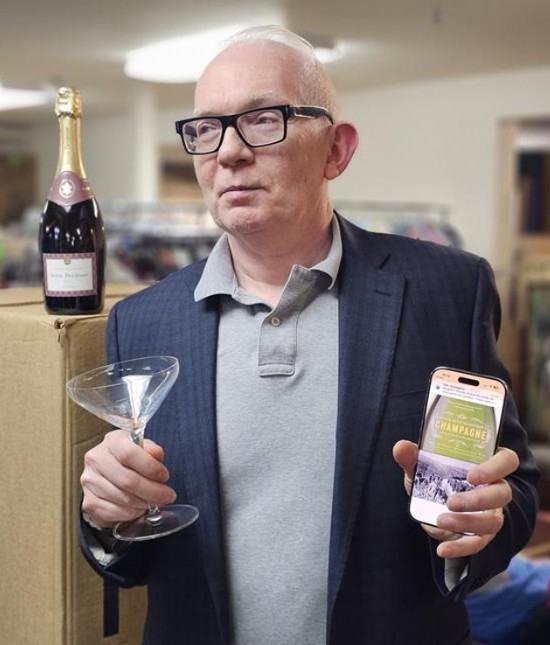
Champagne, sparkling wine, Cava, and last but not least, Prosecco, are all forms of carbonated wine. The history of this product begins in Northern France, and it is pretty unexpected. The region has had a problematic past. Wars have ravaged this area for centuries. And it is hard to believe that a product famous worldwide, linked to celebrations, weddings, parties, and polo, could have appeared from such a bleak past.

Before diving into history, I want to explain the proper way to open a bottle of champagne. First, you need to remove the foil around the cork. Removing the foil will expose the cage. The cage is a metal wire around the cork. The cage can be removed with six twists of the wire. Next, and most importantly, cover the cork with a cloth. Hold the cork and cloth in one hand and twist the bottom of the bottle with the other. Twist until you hear the pop of the cork. For safety reasons, do not let corks fly free.

There is as much as three times the pressure in a champagne bottle as in a car tire.

So, letting it fly could be dangerous. Also, leave the sabering bottles open to the professionals. Once opened, pour into a long champagne flute and enjoy.

Don and Petie Kladstrup have written an excellent history of the area and wine. Their book, Champagne, covers all aspects of the wine and its history. The Champagne area in France is synonymous with war. From Attila the Hun in 451 BC through World War II, men have died on the battlefields in this region. Churchill is famously quoted as saying during World War I:

“Remember, gentlemen, it’s not just for France we are fighting for, it’s Champagne!”

The story always starts with a monk named Don Perignon. He did not invent champagne, but his contributions to winemaking are enormous. The standards he employed in his vineyard are still used today. Wine’s carbonation is a natural process. It involves yeast and sugar, and the bubbles are a byproduct of the process. No one understood this process until Louis Pasteur discovered yeast was a living organism and studied fermentation.

Over time, sparkling wine became popular in royal courts and was soon the new sensation.

Champagne has long been associated with fun and celebration. Louis XV commissioned the first painting that shows champagne bottles in 1735.

Jumping to the early 20th century, who cannot forget the novel, The Great Gatsby, and his champagne parties in the roaring twenties. If someone asks when you should drink champagne, I will refer them to a quote by Lily Bollinger, one of the grand dames of champagne:

“I drink Champagne when I am happy, and when I am sad. Sometimes I drink it when alone. I consider it compulsory in company. I sip a little if I’m hungry. Otherwise, I don’t touch it—unless I’m thirsty, of course.”

I highly recommend the book Champagne by Don and Petie Klapstrup and the documentary, A Year in Champagne. The history and process of making sparkling wine are fascinating.
Filed Under: Staff Reviews: Books, Films, Music, and More

Primary Sidebar

Comlib

Support the Library

The Community Library’s free resources and services reflect the generosity of community members like you!
Donate
Gold Mine Stores
Volunteer

The Community Library

Location

415 Spruce Ave. North
PO Box 2168
Ketchum, ID 83340

Hours

Sunday
closed
Monday
10:00am - 6:00pm
Tuesday
10:00am - 8:00pm
Wednesday
10:00am - 8:00pm
Thursday
10:00am - 8:00pm
Friday
10:00am - 6:00pm
Saturday
10:00am - 6:00pm

Contact

208.726.3493
info@comlib.org

About us

Site Map

  • Home
  • Visit The Community Library Association
  • Events
  • Events and Programs
  • Use the Library
  • Catalog
Got a question? Ask Us

THE COMMUNITY LIBRARY ASSOCIATION

  • The Community Library
  • The Jeanne Rodger Lane Center for Regional History
  • The Gold Mine Stores

MAILING ADDRESS

PO Box 2168
Ketchum, ID 83340
  • Instagram
  • Facebook
2026 © The Community Library Association, Inc. All Rights Reserved | The Community Library is a 501(c)(3) tax-exempt nonprofit organization | Federal Tax ID 82-0290944