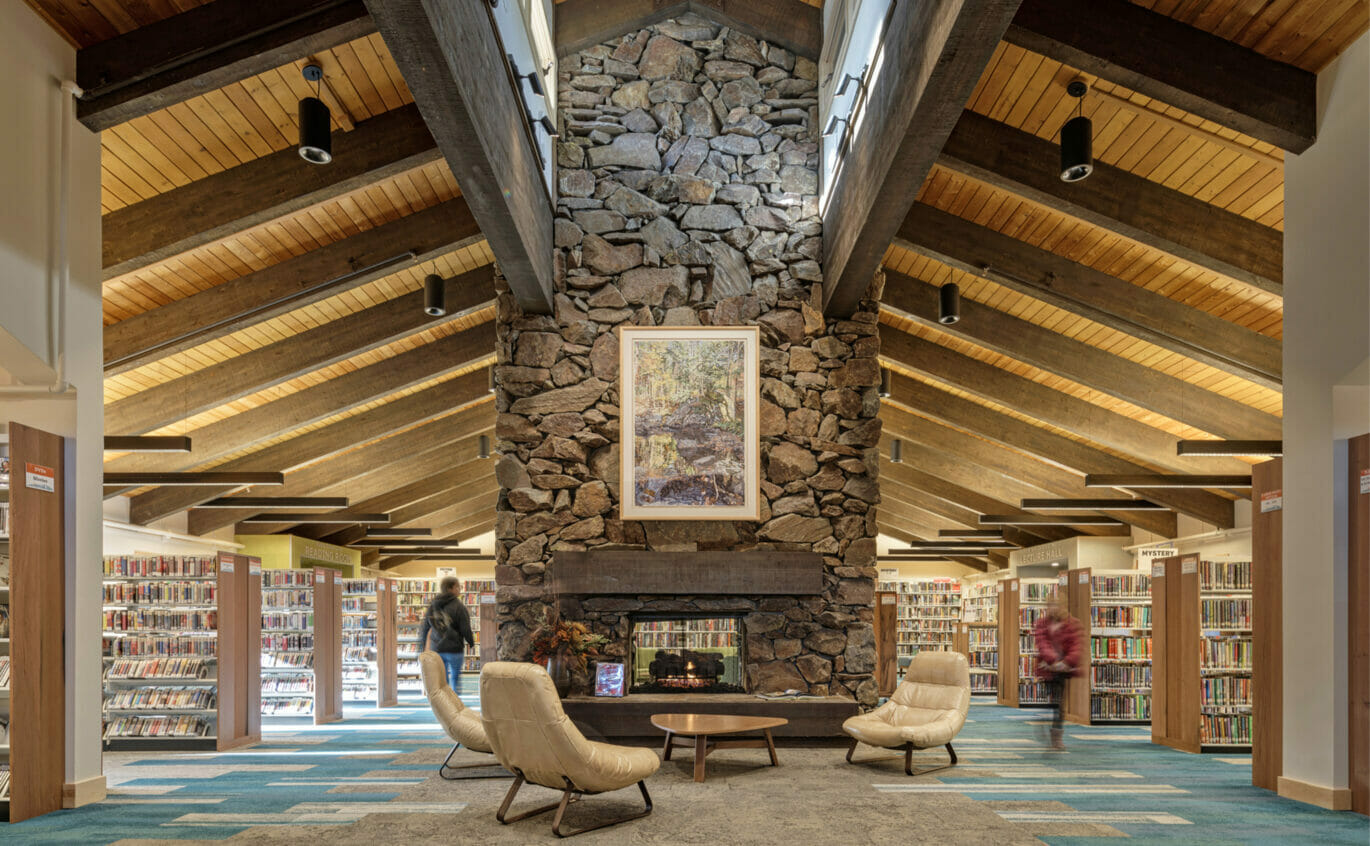
Banned Books Week, October 4 – 10, celebrates the freedom to read and the power of books to open doors to new ideas, experiences, and perspectives.
This year’s theme, “Let Books Be. Protect the Freedom to Read,” arrives as books continue to be challenged in Idaho and across the nation, raising questions about who gets to decide what young people can read—and what libraries and schools can provide.
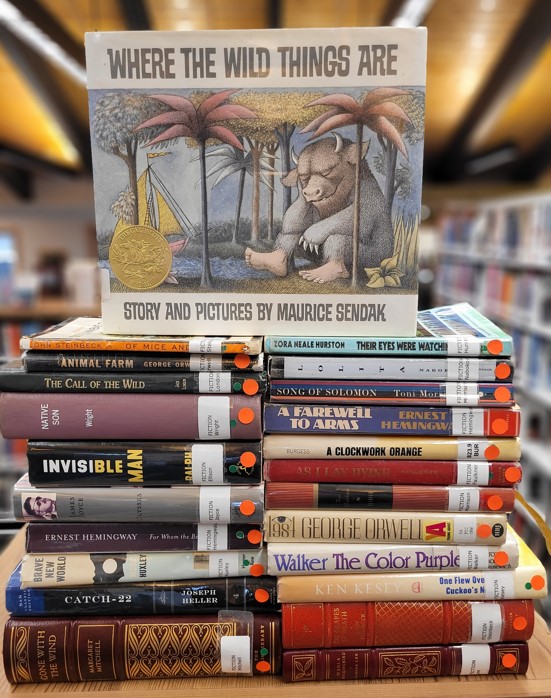
Starting October 5, The Community Library is offering a banned books display in the stacks for you to choose from and more recommendations online here.
Judge for yourself the literary merit of the banned books on this list. Check off five you’ve read and get a Banned Books Week sticker at the front desk.
Banned Books Week Events
Want to include your voice? Stop by and add your favorite banned titles to the Banned Books Shout-Out Station to post books in which you’ve found meaning.
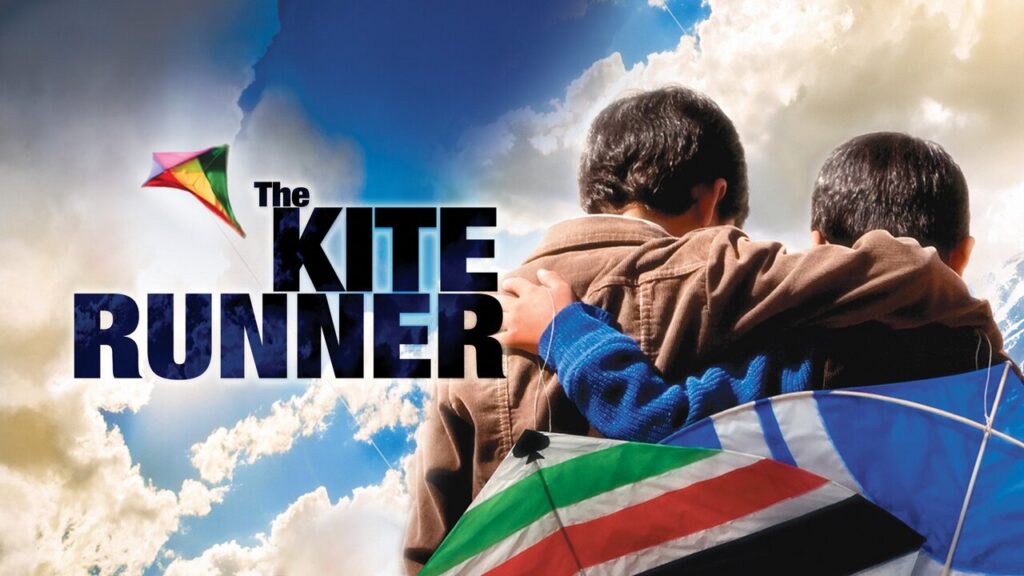
We’ll also be screening The Kite Runner film, based on the frequently banned and challenged book by Khaled Hosseini on Tuesday, October 6 (more here).
The Library’s Book Club is also hosting a discussion of The Kite Runner on Wednesday, October 7 (more/register here). Both events begin at 5:30 p.m.
History Half Hour: Banned Books, Past & Present • Noon, Wednesday, October 7
Wood River Museum of History + Culture
Drop in to the Wood River Museum of History and Culture for a History Half Hour examining the evolving landscape of book challenges and bans as we recognize Banned Books Week (Oct. 4–10). We will be meeting up in the Army tent within the Museum’s newest exhibit, Words in War: Readers, Writers and World War II. More here.
More here about book banning from the America Library Association.
To herald the right to read freely and fearlessly with all our might, we’re re-issuing a 2022 essay from the Library’s collection manager (retired), Cathy Butterfield, called “Moral Panic and the Banning of Books.”
But first…
The Library’s Wood River Museum of History + Culture opened a new exhibit called “Words in War: Readers, Writers, and World War II.” Through stories of Ernest Hemingway, Chief Army Librarian Ray Trautman, and other writers and readers, the exhibit explores how words mattered in World War II and how books have been another terrain where freedom is contested.
As part of the exhibit, we’re inviting patrons to participate in a Little Free Library, built around books that were banned or challenged during World War II, as well as through to today.
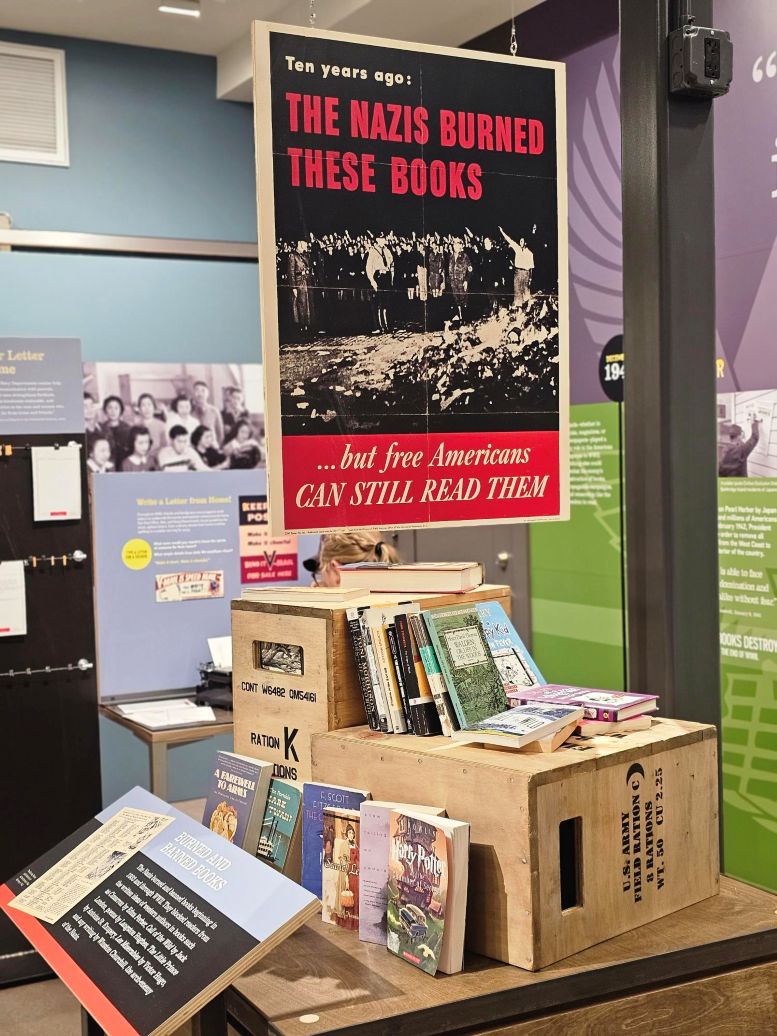
Do you have an extra copy of a book by an author whose work was banned in Nazi Germany during WWII, such as Helen Keller, Ernest Hemingway, Pearl Buck, or Langston Hughes? Do you have an extra copy of a book that has been challenged more recently, such as Anne Frank: Diary of a Young Girl, or Year of Wonders, or Captain Underpants?
If you’d like to donate one of these books to a little free library at the Museum as part of the exhibit, please bring it to the front desk of the Museum! More here about the Wood River Museum of History + Culture, 4th and Walnut in Ketchum
More here about the exhibit, Words in War: Readers, Writers, and World War II
Moral Panic and the Banning of Books: Re-issued
by Cathy Butterfield, Collections Manager
September 13, 2022
The recognition that knowledge is a form of power has shaped libraries around the world and through the ages.
Our earliest forms of written symbol and history are passed down to us through myriad forms of libraries throughout the ages, from the cave art of Lascaux, to Babylonian clay tablets from the 3rd century B.C., to the website “Archive of Our Own.” Without the archival passion to preserve, those records would have returned to river mud, or cemented into the walls of fortresses (many were.)
The emperor Shih Huang-ti of the Ch’in dynasty ordered all historical records other than those of the Ch’in to be destroyed so that history would seem to begin with his rule. Preservation of the earliest records were the province of kings and merchant princes, pharaohs, and conquering generals.
In 48 BC, a good part of the great Library of Alexandria was sacked and burned—one of the chief suspects was Julius Caesar. One of the first known libraries made accessible to the public, rather than the elite, was launched in Rome soon after Caesar’s death. The historian Pliny understood the significance, praising the founder Asinius Pollio: ingenia hominum rem publicam fecit (“He made men’s talents a public possession.”). That may be the most radical aspect of a public library—it shares the power of information with their entire community, rather than just the powerful.
That may be the most radical aspect of a public library—it shares the power of information with their entire community, rather than just the powerful.
The director of the Boundary County Library in Bonner’s Ferry, Kimber Glidden, resigned this last week, citing a “political atmosphere of extremism, militant Christian fundamentalism, intimidation tactics, and threatening behavior currently being employed in the community.” A few short years ago, this same library won the award for Best Small Library in the country. What happened? Boundary County’s own web page has a cogent and concise farewell letter posted on their main page that goes straight to the point.
“This is about control of what information our community is allowed access to,” wrote Glidden. “What is the weapon a small number of people are using to divide this community? Fear, irrational threats, and moral panic.”
Moral panic is a powerful force, shaped by deception, intimidation, and irrational rhetoric. Those generating moral panic about a community having free access to books have a greater agenda—control of the institution as a whole, and by extension, the community it serves. The forces behind bans and challenges want to be kings and merchant princes, and shape history to suit their needs. As Kimberly Giddens says in her farewell:
“Now more than ever it is imperative that we guarantee the freedom to read, the freedom of expression, the freedom of information, and the right to a fair and balanced education.”
~Kimber Gidden, FORMER Boundary Country Library Director
“Now more than ever it is imperative that we guarantee the freedom to read, the freedom of expression, the freedom of information, and the right to a fair and balanced education. The library will stand to protect the rights of all people.
“It is time to take a stand against false narratives. Thank you and spread the word.”